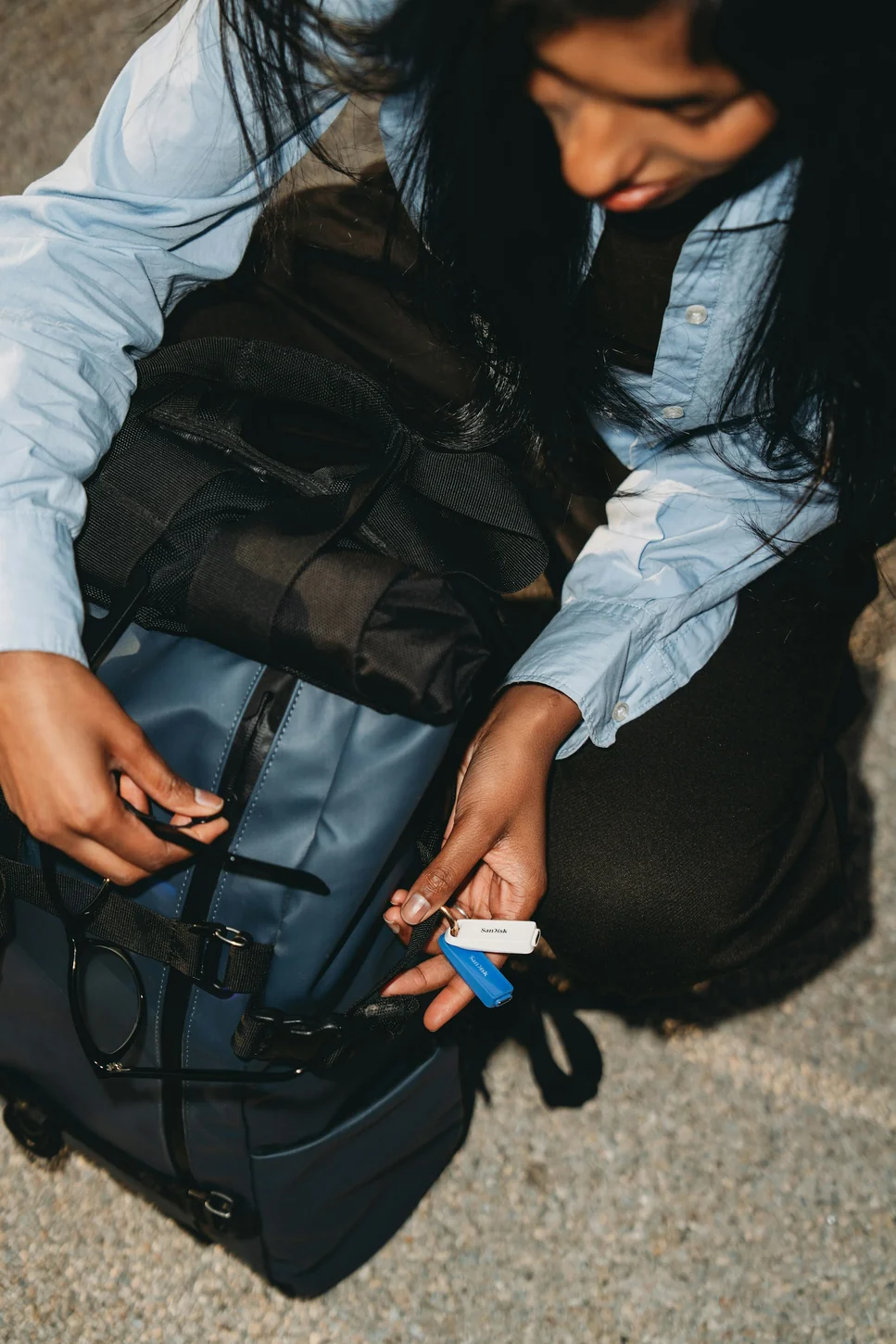
Zone 1: flat heavy items against your back
Laptop, tablet or document folder should stay against the back panel. This stabilises weight and prevents a rigid item from distorting the outer face.
Zone 2: compressible clothing in the core
Put clothing in the centre, folded or rolled consistently. Packing cubes can help organisation but do not create space; their main value is holding shape and speeding access.
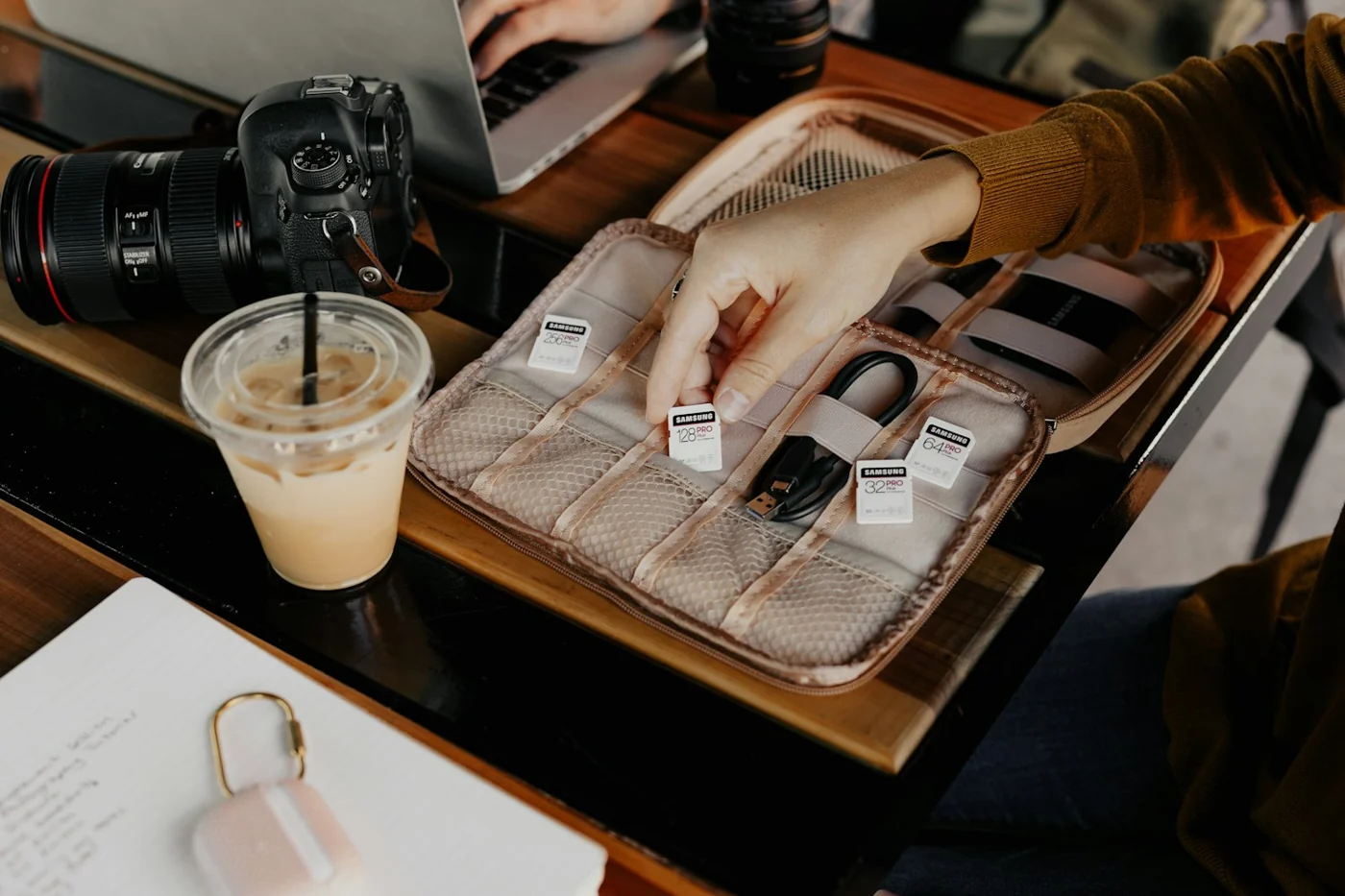
Zone 3: security items at the top
Liquids, electronics requested at security and travel documents should be reachable without dismantling the bag. A top or front compartment works best.
Fill gaps, not outer pockets
Socks, underwear or cables can occupy gaps between objects. Avoid forcing exterior pockets: this is a common way to turn a 20 cm bag into a 23 cm bag.
Use compression straps after packing, not before
Pack coherently first, close the bag, then tighten straps gradually. Using compression simply to crush an obviously overloaded bag does not guarantee it will fit the sizer.
Keep one genuinely fast-access pocket
Phone, passport, earphones and charging cable are repeatedly used. A dedicated pocket prevents opening the main compartment ten times a day.
Final test: measure the packed bag
Measure height, width and especially depth with the bag full. That real footprint matters more than the product dimensions when empty.
How we work
We verify information, cite sources where relevant and date our updates. Prices, availability and rules that may change should always be checked again with the relevant source or service.
Read our full method →